

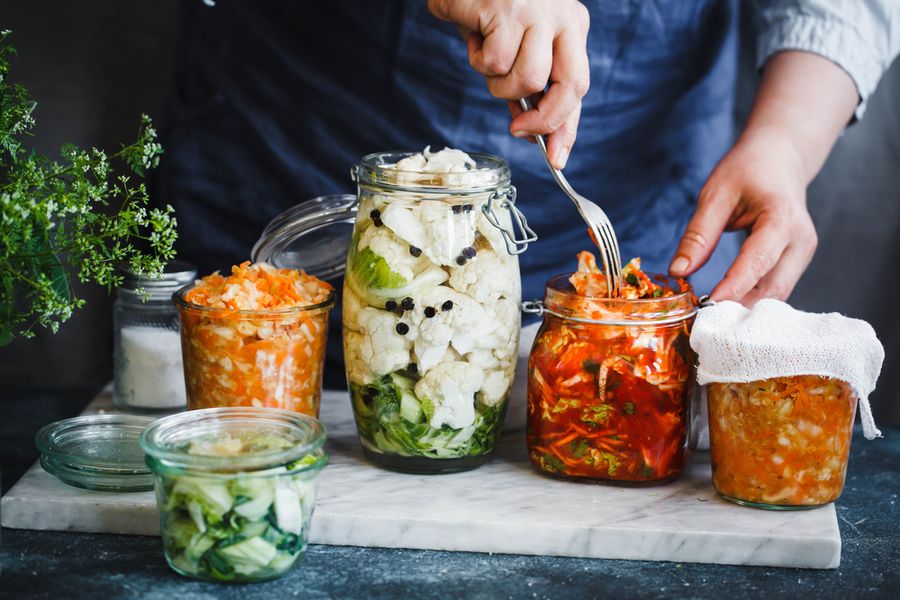
Fermentation brings everyday ingredients to life, transforming simple produce into vibrant, tangy, and nutrient-rich foods. The process relies on natural microorganisms that quietly reshape flavors while improving digestibility and preservation. With a few jars, salt, and patience, anyone can explore this ancient craft without special equipment or advanced skill. Fermented foods also offer creative satisfaction, encouraging experimentation with spices, textures, and regional traditions. A home kitchen becomes a small laboratory where curiosity leads to bold, memorable flavors.
1. Sauerkraut: The Gateway Ferment
Sauerkraut is one of the simplest and most rewarding fermentation projects for beginners. All it requires is cabbage and salt. Thinly sliced cabbage is massaged with salt until it begins releasing water, then it is tightly packed into a jar where it creates its own brine. The natural bacteria on the cabbage begin converting sugars into lactic acid, which preserves the vegetable and produces a bright, tangy flavor.
Within a week, you can start tasting your kraut; after two to four weeks, the flavor becomes deeper and more complex. You can personalize each batch by adding caraway seeds, garlic, chili flakes, or even shredded carrots for color.
2. Kimchi: A Bold, Spicy Ferment
For those who want something more assertive, kimchi offers heat, crunch, and a layered flavor profile. Traditionally made with Napa cabbage, radish, garlic, ginger, and Korean chili flakes (gochugaru), kimchi relies on the same lactic acid fermentation process that powers sauerkraut. The spice mixture coats the vegetables before they ferment in a jar or crock.
Kimchi can be ready in as little as a few days and continues developing flavor for months. Once matured, it adds character to fried rice, ramen bowls, grilled meats, or simple eggs. It’s also a satisfying introduction to Korean culinary traditions.
3. Kombucha: Homemade Sparkling Tea
Kombucha starts with sweetened tea and a SCOBY (Symbiotic Culture of Bacteria and Yeast). While the SCOBY may look unusual, it is the engine that transforms tea into a fizzy, lightly acidic drink with probiotic benefits. After brewing sweet tea, the SCOBY ferments it for about one to two weeks, depending on room temperature and your preferred level of tartness.
Once the first fermentation is complete, you can flavor the kombucha with fruit juices, herbs, ginger, or spices during a second fermentation that naturally carbonates the drink. Homemade kombucha is customizable, cost-effective, and far more flexible than store-bought options.
4. Sourdough Starter: A Living Leavening Agent
A sourdough starter captures wild yeast from flour and the surrounding environment. Equal parts flour and water are mixed and left at room temperature, where natural microbes begin feeding and multiplying. Daily feedings help the starter strengthen until it becomes active enough to raise bread without commercial yeast.
Maintaining a starter feels like nurturing a tiny pet—one that rewards you with fragrant loaves, pancakes, crackers, waffles, and more. Sourdough baking opens a door into the science of gluten development, fermentation timing, and flavor balancing, offering endless learning opportunities.
5. Yogurt: Creamy, Tangy, and Surprisingly Simple
Homemade yogurt requires only milk and a small spoonful of live-culture yogurt to act as a starter. The milk is gently heated, cooled, and inoculated with the culture before incubating at a warm temperature for several hours. The longer it incubates, the firmer and tangier the final result.
Making yogurt at home allows you to control sweetness, thickness, and fat level. You can strain it for Greek yogurt, blend it into smoothies, or use it for marinades and dressings. Once you’ve made a batch, a few tablespoons can start the next one, making the process self-sustaining.
6. Pickled Vegetables: Crunchy and Customizable
Fermented pickles differ from vinegar pickles because they rely on saltwater brine rather than acidic liquid. Cucumbers, carrots, green beans, radishes, and cauliflower all thrive in a simple brine that encourages the growth of lactic acid bacteria. Over several days to several weeks, the vegetables become tangy and crisp.
Seasonings offer endless personalization: dill and garlic for classic pickles, mustard seeds for a sharp edge, or fresh herbs and citrus peel for brightness. Fermented vegetables elevate sandwiches, grain bowls, and snacks with minimal effort.
7. Ginger Bug: A Starter for Natural Sodas
A ginger bug is a wild-fermented mixture of fresh ginger, sugar, and water. Daily feedings encourage the growth of natural yeast, creating a bubbly starter capable of fermenting homemade sodas. Once active, it can power drinks like homemade ginger ale, fruit sodas, or herbal tonics.
The flavor is refreshing and slightly funky, offering an approachable way to explore natural carbonation without specialized equipment.
Hit The Kitchen
Fermentation invites creativity and patience, turning everyday ingredients into flavorful, nutritious staples. Whether you prefer sparkling drinks, pungent condiments, or hearty breads, each project offers a chance to learn, taste, and refine your skills. Your kitchen can become a place where tradition meets experimentation, enriching your meals and deepening your connection to food.